Omega-3 and omega-6
On this page
Eat at least 8 ounces of fish a week, the FDA’s advice for adults. From salmon, sardines or trout that comes to about 280 to 700 mg of EPA and DHA a day. Plant omega-3 from flax, chia and walnuts is a different fat, and your body turns only a little of it into EPA and DHA.
“Omega-3” on a label can mean three different fats, and that’s most of the confusion. A bag of flaxseed and a can of sardines both say omega-3. A fish oil bottle says 1,000 mg on the front. People add these together into one number, when the fish, the flax and the capsule are doing different things.
What we’d do
Eat fish twice a week, with salmon or sardines in the rotation. That’s the US advice, and the fish brings its protein along.
Count EPA and DHA on one line and plant omega-3 on another, and never add them together. If you take a capsule, read the back of the label, and talk to your doctor before taking more than 1 g of EPA and DHA a day. If you don’t eat fish, algae oil has EPA and DHA directly.
If you remember three things
- The fish you pick changes it about ten times. Three ounces of salmon has about 1.8 g of EPA and DHA, canned light tuna 0.2 g.
- Plant omega-3 counts on its own line. In young women only about 21% became EPA and 9% DHA, and less in men.
- Fish oil capsules didn’t prevent major heart events in VITAL, and above 1 g a day they made an irregular heartbeat about 50% more likely.
What are the three omega-3s?
- ALA (alpha-linolenic acid) comes from plants: flaxseed, chia, walnuts and canola oil. It’s essential, since your body can’t make it, and the US Adequate Intake is 1.1 g a day for women and 1.6 g for men.
- EPA and DHA are longer chains, found mostly in fish and seafood. These are the omega-3s in the heart and brain studies, and the ones a fish oil label lists.
EPA and DHA start in algae. Fish build them up by eating algae, or smaller fish that ate algae, which is why oil made from algae works for vegans.
Your body can lengthen ALA into EPA and DHA, but not much of it. In one tracer study, young women given 700 mg of labeled ALA turned about 21% of it into EPA and 9% into DHA. In men the conversion to EPA is “limited” and to DHA “very low”, in the words of a review of these studies. A tablespoon of ground flaxseed, with 1.6 g of ALA, is good for your ALA. It isn’t a serving of fish.
How much is in each fish?
The FDA’s advice is in ounces of fish, not milligrams, so here’s what 8 ounces a week of each fish gives you per day, from the USDA’s tables.
| Fish | EPA and DHA in 3 oz | 8 oz a week gives, per day |
|---|---|---|
| Salmon, farmed Atlantic | 1.83 g | about 700 mg |
| Herring | 1.71 g | about 650 mg |
| Mackerel, Atlantic | 1.02 g | about 390 mg |
| Sardines, canned | 0.83 g | about 320 mg |
| Trout, farmed rainbow | 0.74 g | about 280 mg |
| Tuna, albacore, canned | 0.73 g | about 280 mg |
| Tuna, light, canned | 0.19 g | about 70 mg |
| Cod | 0.13 g | about 50 mg |
| Shrimp | 0.03 g | about 10 mg |
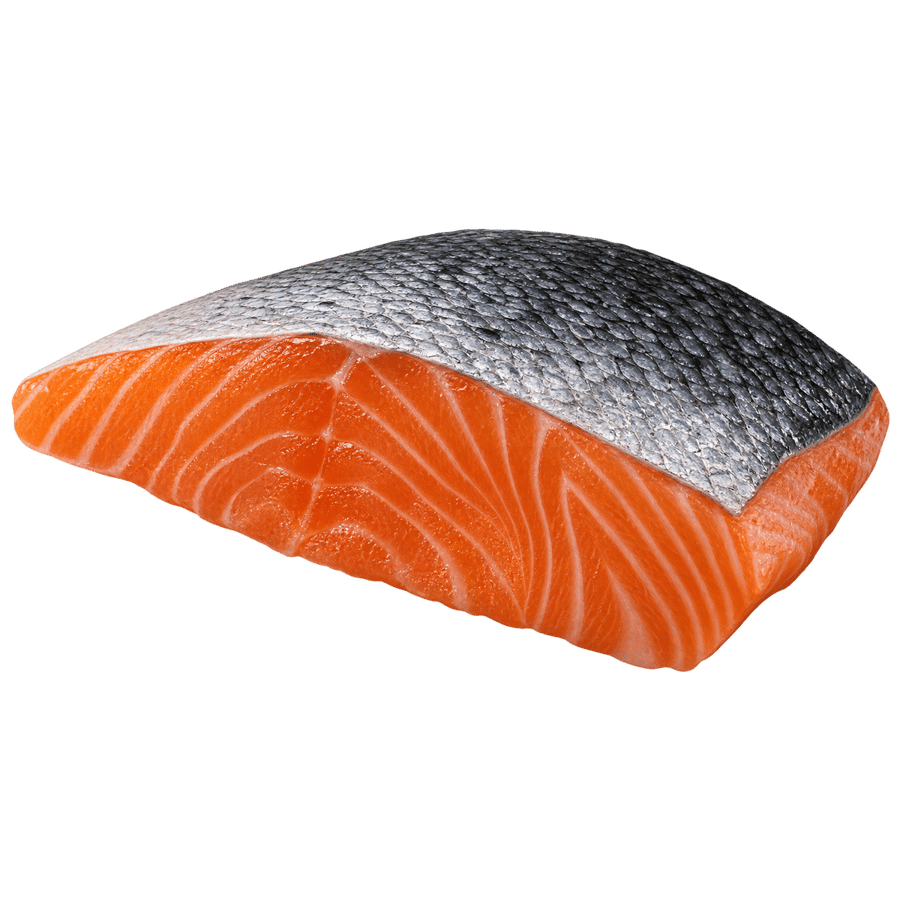
Eight ounces is two servings the size of your palm, which is how the FDA tells you to judge 4 ounces. Salmon twice a week lands near the top of the range. Light tuna twice a week barely moves it, and shrimp hardly at all. Salmon, sardines and freshwater trout are on the FDA’s Best Choices list for mercury. King mackerel, a different fish from Atlantic mackerel, is on its list to avoid.
The omega-3 counter adds up your own week, and tells you which fish closes the gap.
Do fish oil capsules do the same thing?
That’s what VITAL set out to test. Researchers gave 25,871 US adults, men 50 and older and women 55 and older, either 1 g a day of fish oil or a placebo, and followed them for a median of 5.3 years. Each capsule held 840 mg of omega-3, 460 mg of EPA and 380 mg of DHA.
Major heart events came out about even, 386 on fish oil and 419 on placebo, a difference small enough to be chance. Heart attacks on their own were lower on fish oil, 145 against 200. The trial didn’t set out to prove that, so it’s a lead to follow up, and the main result stands.
Capsules also change the heart’s rhythm. In 2021, Gencer and colleagues pooled seven big heart trials of fish oil capsules, with 81,210 people followed for about five years. Fish oil raised the risk of atrial fibrillation, an irregular heartbeat, by about 25%. In the trials that gave more than 1 g a day, the risk was about 50% higher. Each extra gram a day added about 11%.
The newest US cholesterol guideline, from March 2026, says dietary supplements aren’t recommended to lower LDL or triglycerides, and that nonprescription fish oil is “not equivalent to” the prescription omega-3 medicines doctors use for high triglycerides. If you take one of those, keep taking it and ask your doctor before changing anything. Fish oil capsules protect your heart has the full story.
Isn’t omega-6 the problem?
Omega-6 gets blamed for a lot. Its main form, linoleic acid, is in seed oils, nuts and seeds, and it’s essential too. The US Adequate Intake is 12 g a day for women 19 to 50 and 17 g for men 19 to 50.
The worry is that it causes inflammation. In 15 randomized trials in healthy people, eating more linoleic acid didn’t raise CRP or any of the other inflammation markers measured. And in 30 cohort studies in 13 countries, with 68,659 people, those with more linoleic acid in their blood had less heart disease, fewer deaths from it and fewer ischemic strokes, the kind caused by a blocked artery.
The popular fix is to get your omega-6 to omega-3 ratio down. You can do that by eating less omega-6 without eating any more fish, which leaves your EPA and DHA where they were. The number that tracks the benefit is your EPA and DHA, and fish is what raises it. The omega-6 ratio myth goes through it.
What if you’re pregnant or breastfeeding?
The FDA says to eat 8 to 12 ounces of seafood a week that’s lower in mercury, which is 2 to 3 servings from its Best Choices list. Salmon, sardines and freshwater trout are on it. Skip the highest mercury fish: king mackerel, marlin, orange roughy, shark, swordfish, bigeye tuna and tilefish from the Gulf of Mexico. The 2026 Dietary Guidelines name the same three, “salmon, sardines, trout”, as the fish to eat in pregnancy. Capsules in pregnancy are a question for your midwife or doctor.
12 sources
- US Food and Drug Administration, Advice about Eating Fish, content current as of March 5, 2024fda.gov
- US Department of Agriculture and US Department of Health and Human Services, Dietary Guidelines for Americans, 2025 to 2030, pp. 3 and 8, January 2026cdn.realfood.gov
- US Department of Agriculture and US Department of Health and Human Services, Dietary Guidelines for Americans, 2020 to 2025, Appendix 1 Table A1-2, December 2020dietaryguidelines.gov
- USDA FoodData Central SR Legacy, EPA and DHA per 3 oz: Atlantic salmon, farmed, cooked (FDC 175168), Atlantic sardines canned in oil (FDC 175139), rainbow trout, farmed, cooked (FDC 173718), light tuna canned in water (FDC 173709), as listed on NutritionValue.orgnutritionvalue.org
- Burdge and Wootton, Conversion of alpha-linolenic acid to eicosapentaenoic, docosapentaenoic and docosahexaenoic acids in young women, British Journal of Nutrition, 2002pubmed.ncbi.nlm.nih.gov
- Burdge and Calder, Conversion of alpha-linolenic acid to longer-chain polyunsaturated fatty acids in human adults, Reproduction Nutrition Development, 2005pubmed.ncbi.nlm.nih.gov
- Doughman, Krupanidhi and Sanjeevi, Omega-3 fatty acids for nutrition and medicine: considering microalgae oil as a vegetarian source of EPA and DHA, Current Diabetes Reviews, 2007pubmed.ncbi.nlm.nih.gov
- Manson and others, Marine n-3 fatty acids and prevention of cardiovascular disease and cancer (VITAL), New England Journal of Medicine, 2019pmc.ncbi.nlm.nih.gov
- Gencer and others, Effect of long-term marine omega-3 fatty acids supplementation on the risk of atrial fibrillation in randomized controlled trials of cardiovascular outcomes, Circulation, 2021pmc.ncbi.nlm.nih.gov
- Marklund and others, Biomarkers of dietary omega-6 fatty acids and incident cardiovascular disease and mortality (FORCE), Circulation, 2019pmc.ncbi.nlm.nih.gov
- Johnson and Fritsche, Effect of dietary linoleic acid on markers of inflammation in healthy persons: a systematic review of randomized controlled trials, Journal of the Academy of Nutrition and Dietetics, 2012pubmed.ncbi.nlm.nih.gov
- Blumenthal and others, 2026 ACC/AHA/multisociety Guideline on the Management of Dyslipidemia, Circulation, March 2026, section 4.1.5 and its omega-3 medicine tableapi.iscpcardio.org