You need to fix your omega-6 to omega-3 ratio
Short answerNot the way you think
On this page
Not the way people mean it. The number to raise is your EPA and DHA, the omega-3s from fish, and eating fish raises it directly. In 30 cohort studies, people with more omega-6 in their blood had less heart disease.
The ratio idea has a neat logic. Omega-6 and omega-3 fats use some of the same enzymes in the body, and omega-6 can be turned into compounds involved in inflammation. The argument goes that modern diets carry far more omega-6 than omega-3, mostly from seed oils, that the ratio is out of balance, and that you should cut seed oils to fix it.
Each step sounds reasonable. The trouble is what the ratio lets you do. You can “fix” it by eating less omega-6 without eating a single extra gram of omega-3, and your EPA and DHA stay exactly where they were.
What we’d do
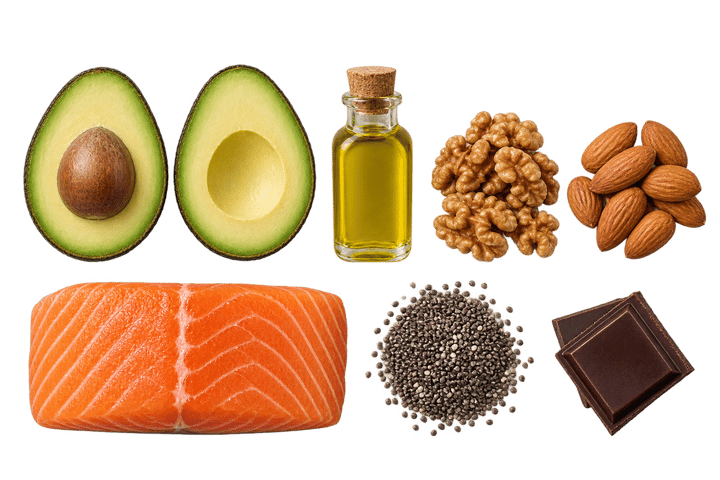
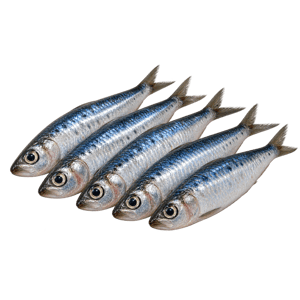
Ignore the ratio and count your EPA and DHA. Eat fish twice a week, with salmon or sardines in the rotation, which is the US advice. Keep using plant oils in place of butter. Cutting them to improve a ratio swaps one problem for another if butter fills the gap.
If you remember three things
- A ratio can improve while your omega-3 stays at zero. Count EPA and DHA instead.
- In 15 trials in healthy people, more omega-6 didn’t raise inflammation markers.
- In 30 cohorts, more omega-6 in the blood went with less heart disease, 22% fewer deaths from it near the top of the range than near the bottom.
What does the ratio hide?
Think of it like judging your savings by the ratio of what you save to what you spend. Cut your spending and the ratio improves, even if your savings account is still empty. What you wanted was more savings.
Here’s how that plays out with food. Picture two people who each eat 15 g of linoleic acid, the main omega-6, and almost no fish. One cuts seed oils and gets down to 7 g of omega-6. Their ratio halves. Their EPA and DHA haven’t moved. The other keeps the seed oils and adds 3 oz of salmon twice a week, which brings about 1.8 g of EPA and DHA each time, or about 520 mg a day on average. Their ratio barely changes, and they’re the one now eating what the US fish advice recommends.
What did the studies find?
More omega-6, no more inflammation
15 randomized trials in healthy adults. Johnson and Fritsche, Journal of the Academy of Nutrition and Dietetics, 2012
Raising linoleic acid in the diet didn’t significantly change any of the inflammation markers measured, including CRP, fibrinogen and cytokines. The authors found “virtually no evidence” that adding linoleic acid raised them.
The trials were in healthy people, and they measured markers in the blood rather than disease.
Omega-6 in the blood and heart disease
30 cohort studies, 13 countries, 68,659 people, 15,198 heart events. The FORCE consortium, Circulation, 2019
Researchers measured linoleic acid in blood or fat tissue instead of asking what people ate. Those near the top of the range had about 7% less heart disease, 22% fewer deaths from it and 12% fewer ischemic strokes than those near the bottom. Arachidonic acid, the omega-6 that inflammatory compounds are made from, wasn’t linked to more heart disease.
Observational. People with more linoleic acid in their blood may have differed in other ways.
We’re fairly confident that ordinary amounts of omega-6 don’t cause inflammation or heart disease in people. The evidence comes from the trials on markers and the long cohort studies, and it points the same way.
Isn’t omega-6 something to limit, then?
You need some. Linoleic acid is one of the two fats your body can’t make, and the US Adequate Intake is 12 g a day for women and 17 g for men aged 19 to 50. A tablespoon of corn or sunflower oil has about 7 to 9 g of linoleic acid, and nuts and seeds carry it too.
Where the ratio crowd has a point is the omega-3 side. Many people eat little fish, and plant omega-3 is a poor stand-in, since young women in one tracer study turned only about 21% of it into EPA and 9% into DHA, and men less. Getting more EPA and DHA is a fair goal. Fish gets you there directly, and the FDA’s advice is at least 8 ounces a week.
How much EPA and DHA does fish give you?
Per 3 oz, from the USDA’s tables, farmed salmon has about 1.83 g, sardines 0.83 g, trout 0.74 g and canned light tuna 0.19 g. Eight ounces a week of salmon, sardines or trout comes to about 280 to 700 mg a day. The omega-3 counter adds up your own week, and Omega-3 and omega-6 has the rest.
7 sources
- Marklund and others, Biomarkers of dietary omega-6 fatty acids and incident cardiovascular disease and mortality (FORCE), Circulation, 2019pmc.ncbi.nlm.nih.gov
- Johnson and Fritsche, Effect of dietary linoleic acid on markers of inflammation in healthy persons: a systematic review of randomized controlled trials, Journal of the Academy of Nutrition and Dietetics, 2012pubmed.ncbi.nlm.nih.gov
- US Department of Agriculture and US Department of Health and Human Services, Dietary Guidelines for Americans, 2020 to 2025, Appendix 1 Table A1-2, December 2020dietaryguidelines.gov
- US Food and Drug Administration, Advice about Eating Fish, content current as of March 5, 2024fda.gov
- USDA FoodData Central SR Legacy, EPA and DHA per 3 oz of Atlantic salmon, farmed, cooked (FDC 175168) and Atlantic sardines canned in oil (FDC 175139), as listed on NutritionValue.orgnutritionvalue.org
- Burdge and Wootton, Conversion of alpha-linolenic acid to eicosapentaenoic, docosapentaenoic and docosahexaenoic acids in young women, British Journal of Nutrition, 2002pubmed.ncbi.nlm.nih.gov
- Gebhardt and Thomas, Nutritive Value of Foods, Home and Garden Bulletin 72, Table 9, USDA Agricultural Research Service, 2002ars.usda.gov