What saturated fat does
On this page
Saturated fat raises LDL cholesterol by slowing how fast your liver clears it from your blood. In 15 trials that lasted at least two years, people who ate less of it had 17% fewer heart attacks, strokes and other heart events.
You’ve probably seen both headlines. One says saturated fat clogs your arteries, the other says it was never the problem and butter is back. Both sides quote real studies, and some of them quote the same one. The Cochrane review that found 17% fewer heart events also found little or no change in deaths, so each side quotes the half it likes.
What we’d do
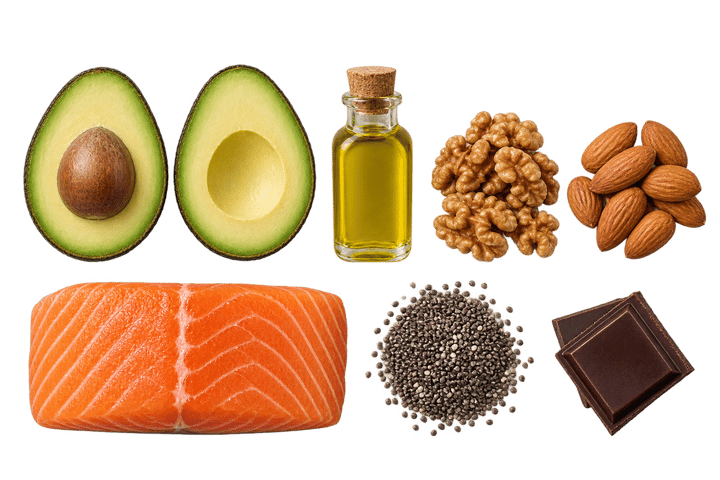
Eat less saturated fat by swapping it, with plant oils going in where butter, coconut oil and fatty meat come out. The feeding trials, the outcome trials and the long cohort studies all point the same way on that swap.
Cutting saturated fat and filling the gap with white bread and sweets does much less. If your LDL is high, cholesterol.guide works out what the swap could do for your number.
If you remember three things
- Saturated fat slows the liver’s drain for LDL. Unsaturated fats in its place open it back up.
- In 15 trials, eating less saturated fat meant 17% fewer heart events over at least two years, with no clear change in deaths.
- What replaces it decides the result. Plant oils did best.
How does saturated fat raise LDL?
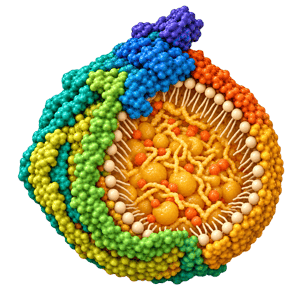
LDL particles carry cholesterol through your blood. Your liver pulls them back out using LDL receptors on the surface of its cells, like drains in a sink. With plenty of drains open, LDL doesn’t build up.
Saturated fat works on both ends. It makes the body form more LDL, and it slows how fast LDL is cleared, so the sink fills. Unsaturated fats do the opposite at the drain. They raise the number of LDL receptors on liver cells and speed up how fast LDL is cleared.
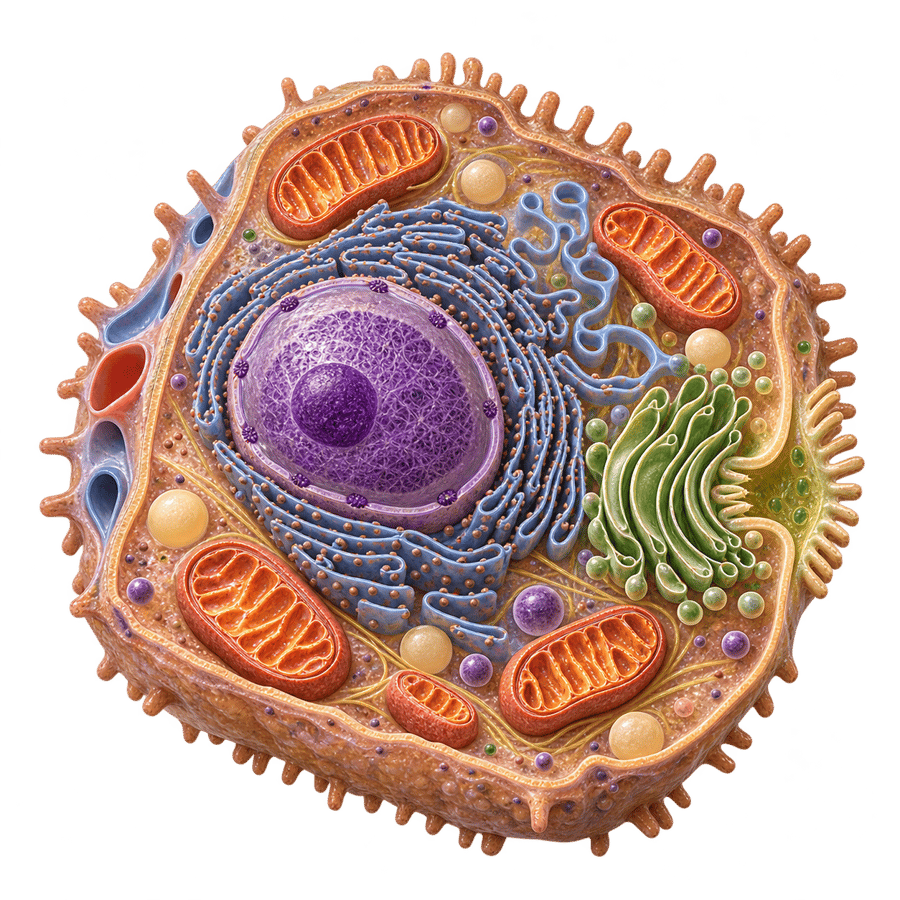
The newest US cholesterol guideline, from March 2026, recommends “replacing saturated and trans fats with dietary monounsaturated and polyunsaturated fats” to lower LDL. It also says that limiting saturated fat while adding unsaturated fat lowers LDL more consistently than cutting the cholesterol in food.
What happened when people ate less of it?
15 trials, at least two years each
56,675 people. Hooper and colleagues, Cochrane review, 2020
Cutting saturated fat lowered heart attacks, strokes and other heart events together by 17%. The bigger the cut, the bigger the effect. In people without heart disease, 56 people would need to cut saturated fat for about four years for one of them to avoid an event.
There was little or no effect on deaths, from any cause or from heart disease. Very few trials tested monounsaturated fat or protein as the replacement.
Butter or plant oil, for 33 years
221,054 US adults in three Harvard cohorts. Zhang and colleagues, JAMA Internal Medicine, 2025
People who ate the most butter had 15% more deaths than those who ate the least, and those who ate the most plant oil had 16% fewer. Swapping 10 g of butter a day, about two thirds of a tablespoon, for plant oils went with 17% lower risk of death.
An observational study. People who used more plant oil may have differed in other ways, though the researchers adjusted for many of them.
The two kinds of study fit together. The trials show that eating less saturated fat cuts heart events. The cohort shows which fat people did best with in its place, over a whole adult life. Canola, soybean and olive oil each went with fewer deaths in that cohort.
We’re confident that swapping saturated fat for plant oils lowers LDL, and that eating less saturated fat cut heart events in trials. The evidence that it makes people live longer is weaker, and it comes mostly from the cohorts.
Does it matter what you eat instead?
It decides most of it. The Cochrane authors wrote that “replacing the energy from saturated fat with polyunsaturated fat or carbohydrate appear to be useful strategies”, and in their trials the two didn’t differ significantly.
In a real kitchen the carbohydrate version usually means crackers and bread. Swap the butter in the pan for olive oil and you’ve changed one thing. Cut the cheese and eat more crackers and you’ve traded one packaged food for another. The 2026 Dietary Guidelines say that “significantly limiting highly processed foods will help meet this goal”, the 10% line.
What’s the best case against it?
Skeptics point to three things, and each is real.
- Deaths didn’t fall. In the Cochrane review, eating less saturated fat didn’t clearly change the risk of dying, only of having a heart event.
- Two old trials went the other way. In the Minnesota Coronary Experiment, 9,423 people in a nursing home and six mental hospitals ate corn oil in place of saturated fat from 1968 to 1973. Their cholesterol fell far more than the control group’s, and they didn’t live longer. The full data only came out in 2016. The seed oil page tells that story, with the authors’ own notes about the margarines of the time.
- Cohorts can mislead. People who eat more olive oil and less butter often live differently in other ways too.
Here’s what the evidence says back. Heart attacks and strokes change a life even when they don’t kill, and that drop held up across 15 trials. The newest US cholesterol guideline, written after all of these studies, still recommends the swap.
What’s still unknown is which unsaturated fat is best, and how much each person responds. The 2026 Dietary Guidelines say “more high-quality research is needed to determine which types of dietary fats best support long-term health.”
How much is 10 g of butter?
It’s about two thirds of a tablespoon, the amount in the 33-year study. A full tablespoon has 7.2 g of saturated fat, a third of a 2,000 calorie day’s line. The same spoon of olive oil has 1.8 g. If you cook with butter every morning, that one swap takes off 5.4 g a day, a quarter of your line, before you change anything else. Where it comes from finds the biggest one in your day.
7 sources
- Fernandez and West, Mechanisms by which dietary fatty acids modulate plasma lipids, Journal of Nutrition, 2005pubmed.ncbi.nlm.nih.gov
- Hooper and others, Reduction in saturated fat intake for cardiovascular disease, Cochrane Database of Systematic Reviews, 2020pmc.ncbi.nlm.nih.gov
- Zhang and others, Butter and plant-based oils intake and mortality, JAMA Internal Medicine, 2025pmc.ncbi.nlm.nih.gov
- Blumenthal and others, 2026 ACC/AHA/multisociety Guideline on the Management of Dyslipidemia, Circulation, March 2026, section 4.1api.iscpcardio.org
- US Department of Agriculture and US Department of Health and Human Services, Dietary Guidelines for Americans, 2025 to 2030, p. 3, January 2026cdn.realfood.gov
- Ramsden and others, Re-evaluation of the traditional diet-heart hypothesis: analysis of recovered data from Minnesota Coronary Experiment (1968-73), BMJ, 2016pmc.ncbi.nlm.nih.gov
- Gebhardt and Thomas, Nutritive Value of Foods, Home and Garden Bulletin 72, Table 9, USDA Agricultural Research Service, 2002ars.usda.gov