How do vegans get omega-3?
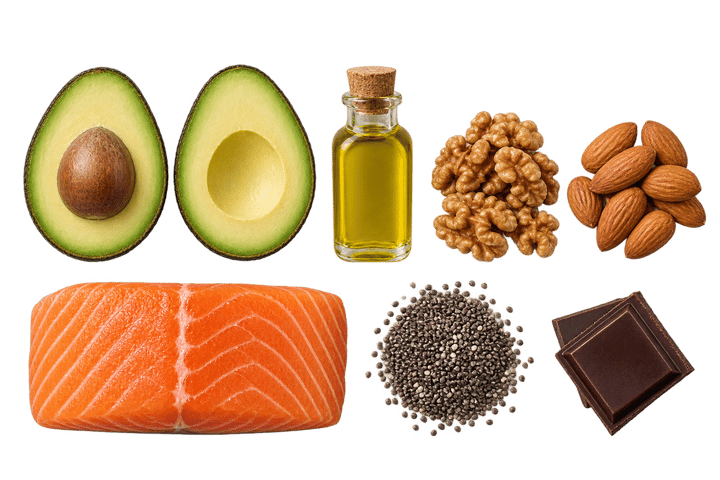
Two ways. The plant omega-3, alpha-linolenic acid (ALA), is easy to get from ground flaxseed, chia seeds, walnuts and canola oil. But your body turns only a small part of ALA into EPA and DHA, the omega-3s in fish, so for those the vegan source is algae oil.
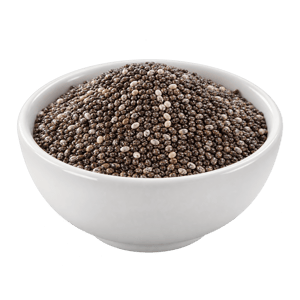
Flax and chia are the usual vegan answer, and the numbers look big. An ounce of chia seeds has about 5 g of omega-3. That’s ALA, though, and the fish omega-3s are a different pair of fats. Your body can make them from ALA, but not much.
What we’d do: a tablespoon of ground flaxseed or an ounce of walnuts most days for ALA. If you want EPA and DHA too, take an algae oil capsule and check its label the way you’d check a fish oil label. If you’re pregnant, ask your doctor or midwife about it.
ALA, the easy part
The US Adequate Intake for ALA is 1.1 g a day for women and 1.6 g for men.
| Food (USDA) | ALA |
|---|---|
| Chia seeds, 1 oz | 5.1 g |
| Walnuts, 1 oz (14 halves) | 2.6 g |
| Ground flaxseed, 1 tbsp | 1.6 g |
| Canola oil, 1 tbsp | 1.3 g |
One tablespoon of ground flaxseed covers a woman’s whole day.
The conversion problem
When researchers gave young women a measured dose of ALA tagged so they could follow it, about 21% ended up as EPA, 6% as DPA and 9% as DHA. In men the conversion to EPA is limited and the step on to DHA is very low, according to a review by the same group. These are small tracer studies, but they all point the same way. A 2019 review of vegan diets said that unless vegans take algal omega-3 supplements, they rely on their own bodies to make EPA and DHA.
Algae oil
Tiny algae in the sea are the primary producers at the base of the ocean’s food chain, and many of them are rich in EPA and DHA. Algae oil comes straight from algae like these, with no fish in between.
In a 2023 trial, 116 omnivores, vegetarians and vegans took 250 mg a day of DHA from the alga Schizochytrium or a placebo, for five weeks each in turn. Blood DHA went up on the algae oil in all three groups.
Algae oil capsules have the same front-and-back label problem as fish oil, so the label check works on them too. The omega-3 counter keeps your ALA on its own line, apart from EPA and DHA.
Fish in a usual week
 Salmon1828 mg EPA plus DHA in 3 oz4 oz
 Sardines835 mg EPA plus DHA in 3 oz0 oz
- Trout744 mg EPA plus DHA in 3 oz0 oz
 Tuna, canned light190 mg EPA plus DHA in 3 oz3 oz
7 oz a week. The US advice is at least 8 oz, two servings of 4 oz.
A fish oil capsule, from the back of the bottle
375 mgof EPA plus DHA a day
You're in or above the band the US fish advice gives. Fish does this without a capsule.
Plant omega-3 (ALA), on its own line
 Walnuts1 oz (14 halves): 2.5 g ALA0 a week
 Ground flaxseed1 tbsp: 1.6 g ALA0 a week
 Chia seeds1 oz: 5.1 g ALA0 a week
- Canola oil1 tbsp: 1.3 g ALA0 a week
0 g of ALA a day from these, against the Adequate Intake of 1.1 g. Oils, nuts and other foods add more.
Your body turns only a small part of ALA into EPA and DHA. In one tracer study of young women it was about 21% to EPA and 9% to DHA, and less in men. So the two are never added together here.
10 sources
- USDA SR Legacy, Seeds, flaxseed (FDC 169414), via NutritionValue.orgnutritionvalue.org
- USDA SR Legacy, Seeds, chia seeds, dried (FDC 170554), via NutritionValue.orgnutritionvalue.org
- USDA SR Legacy, Nuts, English walnuts (FDC 170187), via NutritionValue.orgnutritionvalue.org
- USDA SR Legacy, Oil, canola (FDC 172336), via NutritionValue.orgnutritionvalue.org
- US Department of Agriculture and US Department of Health and Human Services, Dietary Guidelines for Americans, 2020 to 2025, Appendix 1, Table A1-2, 2020dietaryguidelines.gov
- Burdge and Wootton, Conversion of alpha-linolenic acid to eicosapentaenoic, docosapentaenoic and docosahexaenoic acids in young women, British Journal of Nutrition, 2002europepmc.org
- Burdge and Calder, Conversion of alpha-linolenic acid to longer-chain polyunsaturated fatty acids in human adults, Reproduction Nutrition Development, 2005europepmc.org
- Adarme-Vega et al., Microalgal biofactories: a promising approach towards sustainable omega-3 fatty acid production, Microbial Cell Factories, 2012europepmc.org
- García-Maldonado et al., Changes in fatty acid levels after consumption of a novel docosahexaenoic supplement from algae: a crossover randomized controlled trial in omnivorous, lacto-ovo vegetarians and vegans, European Journal of Nutrition, 2023europepmc.org
- Burns-Whitmore et al., Alpha-linolenic and linoleic fatty acids in the vegan diet: do they require dietary reference intake/adequate intake special consideration?, Nutrients, 2019europepmc.org