How many fish oil capsules should I take a day?
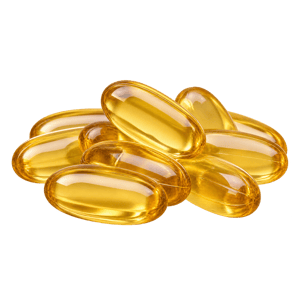
There’s no US capsule count to aim for, so start with fish and use the label only to see what you’re getting. The big number on the front, often 1,000 mg, is the weight of the oil. The omega-3 you’re paying for is the EPA and DHA on the back, and if a day’s capsules add up to more than 1 g of those, talk to your doctor first.
Most people assume a 1,000 mg capsule holds 1,000 mg of omega-3. It holds 1,000 mg of fish oil, and only part of that oil is EPA and DHA. The rest is other fats. How much is EPA and DHA depends on the product, which is why the label check below works from your own bottle.
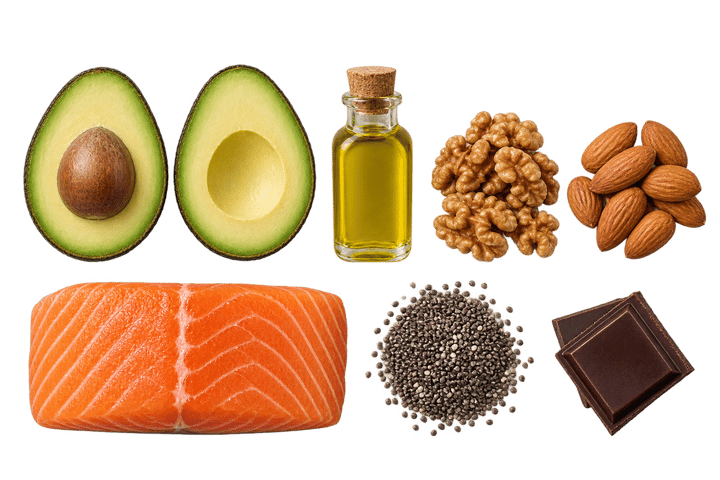
What we’d do: eat salmon, sardines or trout twice a week and skip the capsule. If you take one anyway, look at the back and add up EPA and DHA per capsule. If your daily total comes to more than 1 g, talk to your doctor before you keep going. What foods are high in omega-3? has the food route, fish and plants.
The back of the bottle
Three lines on the Supplement Facts panel do the work: the serving size in capsules, EPA in mg and DHA in mg.
- Add EPA and DHA for one serving.
- Divide by the capsules in a serving to get one capsule’s worth.
- Multiply by the capsules you take a day.
The capsule used in the VITAL trial was a concentrated one. Each 1 g capsule held 840 mg of omega-3, 460 mg of EPA and 380 mg of DHA, so 84% of the oil was the part you’re buying.
A week of fish, counted in capsules
Eight ounces of fish a week, the FDA’s advice for adults, gives about 320 mg of EPA and DHA a day as sardines or about 700 mg as farmed salmon. One VITAL-style capsule a day, at 840 mg, is a bit more than the salmon week. A capsule with 160 mg of EPA and DHA would take two a day to match the sardine week. The label check works out your number.
Why we put fish first
In VITAL, 25,871 US adults took one of those capsules or a placebo every day for a median of 5.3 years. Major heart events came out at 386 on fish oil and 419 on placebo, a difference small enough that it could be chance. Heart attacks on their own were lower on fish oil, 145 against 200, but that was one of the trial’s secondary outcomes, the kind a trial isn’t designed to prove.
Higher doses come with a known risk. Across seven big heart trials, people taking fish oil were about 25% more likely to get atrial fibrillation, an irregular heartbeat, and about 49% more likely in the trials that gave more than 1 g a day. That’s the reason for the 1 g line. Can fish oil cause an irregular heartbeat? has the numbers.
If you’re pregnant or breastfeeding, the FDA’s advice is 8 to 12 ounces of lower-mercury fish a week. Ask your midwife or doctor before taking a supplement. If a doctor prescribed an omega-3 medicine, keep taking it as prescribed.
5 sources
- Manson et al., Marine n-3 fatty acids and prevention of cardiovascular disease and cancer (VITAL), New England Journal of Medicine, 2019pmc.ncbi.nlm.nih.gov
- Gencer et al., Effect of long-term marine omega-3 fatty acids supplementation on the risk of atrial fibrillation in randomized controlled trials of cardiovascular outcomes, Circulation, 2021pmc.ncbi.nlm.nih.gov
- US Food and Drug Administration, Advice about Eating Fish, current as of March 5, 2024fda.gov
- USDA SR Legacy, Fish, salmon, Atlantic, farmed, cooked (FDC 175168), via NutritionValue.orgnutritionvalue.org
- USDA SR Legacy, Fish, sardine, Atlantic, canned in oil (FDC 175139), via NutritionValue.orgnutritionvalue.org