Full-fat dairy is fine now, so eat all you want
Short answerYes, but
On this page
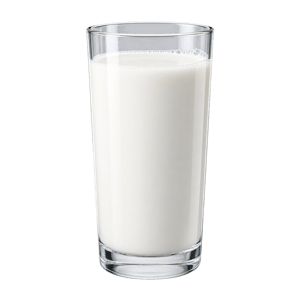
Yes, the 2026 US guidelines say to “include full-fat dairy with no added sugars”. But the same guidelines keep saturated fat under 10% of calories, and three cups of whole milk, their daily dairy goal, hold 15.3 g of it, about 70% of a 2,000 calorie day’s line.
Full-fat dairy spent decades on the wrong side of the advice, so the January 2026 guidelines felt like a reversal. They tell you to choose full-fat dairy, set a goal of three servings a day, and call dairy “an excellent source of protein, healthy fats, vitamins, and minerals”. It’s easy to come away thinking the saturated fat in milk and cheese no longer counts.
It still counts toward the same line. One page later the guidelines say saturated fat “should not exceed 10% of total daily calories”, and they don’t exempt dairy.
What we’d do
Have full-fat dairy where you can taste the difference, and count it. Plain yogurt and milk are the easy ones. Cheese is the dense one, with more saturated fat in an ounce than a cup of whole milk.
If your LDL is high, dairy is often the biggest source in your day, and switching some of it to lower fat versions is one of the simplest swaps there is. For young children, full-fat dairy is the advice.
If you remember three things
- The guidelines say full-fat dairy and also saturated fat under 10%. Both lines apply at once.
- Three cups of whole milk hold 15.3 g of saturated fat, against a 22 g line at 2,000 calories. Three cups of 2% hold 8.7 g.
- An ounce of cheddar has 6.0 g, more than a cup of whole milk.
What do the guidelines say?
From page 2 of the 2025 to 2030 Dietary Guidelines: “When consuming dairy, include full-fat dairy with no added sugars.” And “Dairy serving goals: 3 servings per day as part of a 2,000-calorie dietary pattern, adjusting as needed based on your individual caloric requirements.”
From page 3: “In general, saturated fat consumption should not exceed 10% of total daily calories.”
The two lines sit a page apart, and on 2,000 calories the arithmetic gets tight fast.
How much is three servings?
Here are three ways to eat three servings of dairy in a day, from the USDA’s tables.
| Three servings | Saturated | Share of 22 g | The split |
|---|---|---|---|
| 3 cups of whole milk | 15.3 g | 69% | |
| 3 cups of 2% milk | 8.7 g | 39% | |
| 1 cup of whole milk, 1 oz of cheddar, a container of plain nonfat Greek yogurt | 11.3 g | 51% | |
| 1 cup of whole milk and 3 oz of cheddar through the day | 23.1 g | 104% |
- Saturated
- Monounsaturated
- Polyunsaturated
The last row is a cup of milk in your coffee and cereal plus cheese on a sandwich, on a burger and on pasta. That’s more than the whole day’s line from dairy alone, before the butter in the pan or any meat.
Who is full-fat dairy right for?
Young children, by the guidelines’ own words. “Full-fat dairy products are important for children to help meet energy needs and support brain development.” The adult saturated fat line on this site isn’t meant for them.
Adults whose saturated fat is low elsewhere have room for it. If you cook with olive oil, eat lean meat or fish and rarely have pastry, a cup or two of whole milk fits.
Adults with high LDL usually don’t have the room. Higher fat milk and yogurt and cheese together made up about a tenth of all the saturated fat Americans ate in the national survey the 2020 to 2025 guidelines used, and in some people’s days it’s much more. Where it comes from shows how to find yours.
Isn’t dairy fat different?
That’s the best case for eating more of it. You’ll hear that the saturated fat in cheese and yogurt does less to LDL than the same grams from butter, because of the way the fat sits inside the food. If that’s right, dairy would leave more room under the line than the grams suggest.
Nobody has settled it yet. The 2026 guidelines say “more high-quality research is needed to determine which types of dietary fats best support long-term health”, and they didn’t carve dairy out of the 10% line. Until someone does, we’d count dairy fat like any other and let your own blood test tell you how you respond. How to check sets that up.
4 sources
- US Department of Agriculture and US Department of Health and Human Services, Dietary Guidelines for Americans, 2025 to 2030, pp. 2, 3 and 7, January 2026cdn.realfood.gov
- US Department of Agriculture and US Department of Health and Human Services, Dietary Guidelines for Americans, 2020 to 2025, pp. 44 to 45 (Figure 1-11), December 2020dietaryguidelines.gov
- Gebhardt and Thomas, Nutritive Value of Foods, Home and Garden Bulletin 72, Table 9, USDA Agricultural Research Service, 2002ars.usda.gov
- USDA FoodData Central SR Legacy, Yogurt, Greek, plain, nonfat (FDC 170894)fdc.nal.usda.gov