Is full-fat dairy healthy?
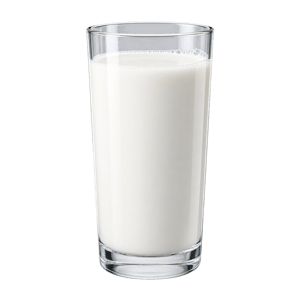
It can fit, if you count it. The 2026 US guidelines say to include full-fat dairy with no added sugars, and in the same document to keep saturated fat under 10% of your calories. A cup of whole milk has 5.1 g of saturated fat, and three cups, the guidelines’ daily dairy goal, have 15.3 g, about 70% of a 2,000 calorie day’s line.
The advice on dairy fat really did change in January 2026. The 2020 to 2025 guidelines suggested fat-free or low-fat milk in place of 2% or whole. The new ones say “include full-fat dairy with no added sugars.” What didn’t change is the cap: “saturated fat consumption should not exceed 10% of total daily calories.” Both lines are in the same short document, and you have to fit the first inside the second.
What we’d do: pick the dairy you like and count its grams. Plain yogurt, a glass of milk and some cheese can all fit. If your day comes out over your line, whole to 2% milk takes off 2.2 g a cup, and a strong cheese lets you use less.
What three servings can cost
| Dairy (USDA) | Saturated fat | Share of a 22 g line |
|---|---|---|
| Whole milk, 1 cup | 5.1 g | 23% |
| 2% milk, 1 cup | 2.9 g | 13% |
| Cheddar, 1 oz | 6.0 g | 27% |
| Cottage cheese, 4% fat, 1 cup | 6.0 g | 27% |
| Vanilla ice cream, ½ cup | 4.5 g | 20% |
| Heavy cream, 1 tbsp | 3.5 g | 16% |
| Sour cream, 1 tbsp | 1.6 g | 7% |
| Plain nonfat yogurt, 8 oz | 0.3 g | 1% |
Three cups of whole milk come to 15.3 g. Make it a cup of whole milk, an ounce of cheddar and a cup of 4% cottage cheese and it’s 17.1 g, before any butter, meat or pastry. Three cups of 2% come to 8.7 g.
Dairy fat also carries a little natural trans fat, which occurs in milk, butter and cheese and wasn’t covered by the FDA’s ban on partially hydrogenated oils.
Children are a different case
The 2026 guidelines say “Full-fat dairy products are important for children to help meet energy needs and support brain development.” That line sits in the section on children 5 to 10. For adults, the saturated fat cap is the one that bites.
What isn’t settled
The 2020 to 2025 guidelines listed full-fat dairy, including whole milk, ice cream and cheese, among the foods highest in saturated fat. The 2026 guidelines call full-fat dairy a source of “healthy fats” and say in the same paragraph that “More high-quality research is needed to determine which types of dietary fats best support long-term health.” We go by the grams until that research is in. The full-fat dairy myth has more, and the scorer below shows what your own dairy adds up to.
4 sources
- US Department of Agriculture and US Department of Health and Human Services, Dietary Guidelines for Americans, 2025 to 2030, pp. 2, 3 and 7, January 2026cdn.realfood.gov
- US Department of Agriculture and US Department of Health and Human Services, Dietary Guidelines for Americans, 2020 to 2025, p. 44, 2020dietaryguidelines.gov
- Gebhardt and Thomas, Nutritive Value of Foods, Home and Garden Bulletin 72, Table 9, USDA Agricultural Research Service, 2002ars.usda.gov
- US Food and Drug Administration, Trans Fatfda.gov