Eating fat makes you fat
Short answerNo
On this page
No. In a trial of 609 adults, a healthy low-fat diet and a healthy low-carb diet lost about the same weight over a year. Fat has 9 calories a gram, more than twice carbs or protein, so the portion is what decides it.
It’s easy to see why the idea sticks. The fat you eat and the fat on your body share a name, and gram for gram, fat really is the densest thing you eat. A whole aisle of low-fat products was built on that logic. Then low-carb diets taught a new generation the reverse, that fat was the thing that made you lose weight. Both camps treated one part of the diet as the cause.
What we’d do
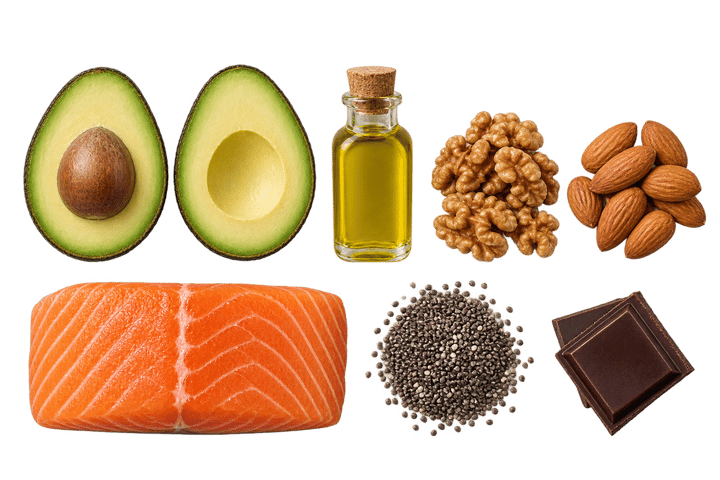
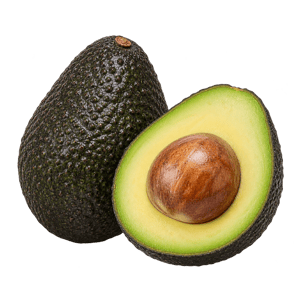
Pick low-fat or low-carb by which one you’ll actually keep eating, since they worked about the same. Measure the oil you pour, because that’s where fat calories sneak in. And spend your fat on olive oil, nuts, avocado and fish, since the kind of fat counts for your heart even when it makes no difference to your weight.
If you remember three things
- Low-fat and low-carb lost about the same weight in a year, 5.3 kg against 6.0 kg.
- Fat is dense. A tablespoon of olive oil has 119 calories, more than a medium banana.
- The kind of fat decides what it does to your LDL. The total barely moves your weight on its own.
What happened when people tried both?
In the DIETFITS trial, researchers at Stanford put 609 adults on either a healthy low-fat diet or a healthy low-carb diet for 12 months. Health educators ran 22 small group sessions for each diet, aimed at the lowest fat or carb intake each person could keep up, with an emphasis on the quality of the food.
The diets really were different. At 12 months the low-fat group got 29% of its calories from fat, and the low-carb group 45%. The low-fat group had lost 5.3 kg and the low-carb group 6.0 kg, about 12 and 13 pounds, and the gap was small enough to be chance.
The low-carb group ate about half again as much of its diet as fat, and lost slightly more weight. If fat by itself made people fat, that’s the opposite of what you’d see.
Why doesn’t fat go straight to your hips?
Your body stores fat when you take in more energy than you use, from any source. Dietary fat, carbs and protein all pay into the same account. The fat on your body holds extra energy from whatever you ate.
Fat’s real effect on weight is through its density. A gram of fat has 9 calories, and a gram of carbohydrate or protein about 4. That’s why a little oil adds up so fast.
| Food | Portion | Calories | Fat |
|---|---|---|---|
| Almonds | 1 oz (24 nuts) | 164 | 14 g |
| Olive oil | 1 tablespoon | 119 | 14 g |
| Banana | 1 medium | 109 | 1 g |
| Avocado | 1 oz | 50 | 5 g |
| White rice, cooked | 1 cup | 205 | 0 g |
A tablespoon of olive oil has more calories than a banana, and a casual pour into a hot pan can easily be two or three. A cup of rice has no fat and still has more calories than the oil. Both counts are real, and your weight responds to the total.
What’s the best case for the myth?
Some people find that cutting fat helps them eat less, because rich food is easy to overeat. Others find the opposite, that fat keeps them full and cutting carbs is what works. Both can be true for different people, and the trial allows for it, since the average loss was the same.
What the evidence doesn’t support is the idea that fat or carbs make you gain weight on their own, whatever the calories. For the weight side in full, bodyfat.guide covers whether a calorie is just a calorie and whether insulin from carbs makes you store fat.
Then how much fat should you eat?
The US range for adults is 20 to 35% of calories, about 44 to 78 g on 2,000 calories, and the two DIETFITS diets sat near either end of it and past it. The range is wide because your weight doesn’t depend much on where you sit in it.
What the kind of fat changes is your blood. The 2026 Dietary Guidelines still say saturated fat “should not exceed 10% of total daily calories”, and swapping saturated fat for plant oils is the change that lowers LDL. How much fat a day? works out your band, and tdee.guide works out your calories.
4 sources
- Gardner and others, Effect of low-fat vs low-carbohydrate diet on 12-month weight loss in overweight adults (DIETFITS), JAMA, 2018pmc.ncbi.nlm.nih.gov
- Gebhardt and Thomas, Nutritive Value of Foods, Home and Garden Bulletin 72, Table 9, USDA Agricultural Research Service, 2002ars.usda.gov
- US Department of Agriculture and US Department of Health and Human Services, Dietary Guidelines for Americans, 2020 to 2025, Appendix 1 Table A1-2, December 2020dietaryguidelines.gov
- US Department of Agriculture and US Department of Health and Human Services, Dietary Guidelines for Americans, 2025 to 2030, p. 3, January 2026cdn.realfood.gov