Which fish has the most omega-3?
Of the fish most Americans buy, farmed Atlantic salmon and herring have the most, about 1.8 and 1.7 g of EPA and DHA in a 3 oz serving. Atlantic mackerel has about 1.0 g, sardines 0.8, trout 0.7 and canned light tuna 0.2. All six are on the FDA’s Best Choices list for low mercury.
It’s easy to think of all fish as omega-3 food. The amounts differ almost tenfold. A 3 oz serving of salmon has about as much EPA and DHA as nine or ten servings of canned light tuna, so a tuna sandwich every day for a week still gives you less than one salmon dinner.
What we’d do: put salmon, herring, mackerel or sardines on the plate twice a week. Canned sardines and herring keep in the pantry. Count tuna as fish and protein, and get your omega-3 from the others.
The ranking
| Fish, 3 oz cooked or drained (USDA) | EPA plus DHA | A day, from 8 oz a week |
|---|---|---|
| Salmon, Atlantic, farmed | 1.83 g | about 700 mg |
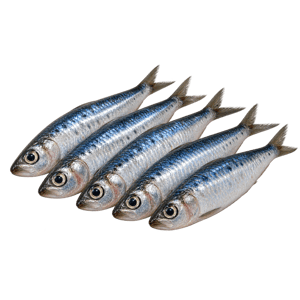
| Herring, Atlantic | 1.71 g | about 650 mg |
| Mackerel, Atlantic | 1.02 g | about 390 mg |
| Sardines, canned in oil | 0.83 g | about 320 mg |
| Trout, rainbow, farmed | 0.74 g | about 280 mg |
| Light tuna, canned in water | 0.19 g | about 70 mg |
The last column is what you’d get from the FDA’s 8 ounces a week if all of it were that fish. The omega-3 counter mixes them for your real week.
Salmon’s number depends on what the salmon ate
Farmed salmon get their omega-3 from their feed, and the feed has changed. Researchers in Scotland measured farmed Atlantic salmon from 2006 to 2015 and found EPA and DHA falling as fish meal and fish oil in the feed were replaced with plant ingredients. By 2015, they worked out, you’d need about twice the 2006 portion for the same EPA and DHA. The USDA’s 1.83 g is one measurement, and the salmon in your store may carry less.
That’s one reason to rotate between salmon and the other fish on the list.
Mercury
Every fish in the table is on the FDA’s Best Choices list. Watch the names, though. Atlantic mackerel is a Best Choice, while king mackerel is on the FDA’s list of fish to avoid, with marlin, orange roughy, shark, swordfish, tilefish from the Gulf of Mexico and bigeye tuna. If you’re pregnant or breastfeeding, the FDA suggests 8 to 12 ounces a week from the Best Choices list.
Fish in a usual week
 Salmon1828 mg EPA plus DHA in 3 oz4 oz
 Sardines835 mg EPA plus DHA in 3 oz0 oz
- Trout744 mg EPA plus DHA in 3 oz0 oz
 Tuna, canned light190 mg EPA plus DHA in 3 oz3 oz
7 oz a week. The US advice is at least 8 oz, two servings of 4 oz.
A fish oil capsule, from the back of the bottle
375 mgof EPA plus DHA a day
You're in or above the band the US fish advice gives. Fish does this without a capsule.
Plant omega-3 (ALA), on its own line
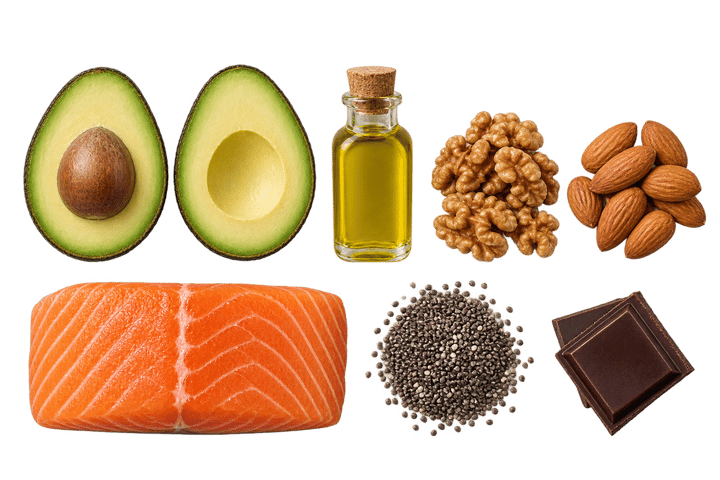
 Walnuts1 oz (14 halves): 2.5 g ALA0 a week
 Ground flaxseed1 tbsp: 1.6 g ALA0 a week
 Chia seeds1 oz: 5.1 g ALA0 a week
- Canola oil1 tbsp: 1.3 g ALA0 a week
0 g of ALA a day from these, against the Adequate Intake of 1.1 g. Oils, nuts and other foods add more.
Your body turns only a small part of ALA into EPA and DHA. In one tracer study of young women it was about 21% to EPA and 9% to DHA, and less in men. So the two are never added together here.
8 sources
- USDA SR Legacy, Fish, salmon, Atlantic, farmed, cooked (FDC 175168), via NutritionValue.orgnutritionvalue.org
- USDA SR Legacy, Fish, herring, Atlantic, cooked (FDC 175117), via NutritionValue.orgnutritionvalue.org
- USDA SR Legacy, Fish, mackerel, Atlantic, cooked (FDC 175120), via NutritionValue.orgnutritionvalue.org
- USDA SR Legacy, Fish, sardine, Atlantic, canned in oil (FDC 175139), via NutritionValue.orgnutritionvalue.org
- USDA SR Legacy, Fish, rainbow trout, farmed, cooked (FDC 173718), via NutritionValue.orgnutritionvalue.org
- USDA SR Legacy, Fish, light tuna, canned in water (FDC 173709), via NutritionValue.orgnutritionvalue.org
- US Food and Drug Administration, Advice about Eating Fish, current as of March 5, 2024fda.gov
- Sprague, Dick and Tocher, Impact of sustainable feeds on omega-3 long-chain fatty acid levels in farmed Atlantic salmon, 2006-2015, Scientific Reports, 2016europepmc.org