Is saturated fat bad for you?
On this page
In the amounts most Americans eat, yes. Saturated fat raises LDL, and in 15 trials with 56,675 people, those who cut it had 17% fewer heart attacks, strokes and other heart events. What you eat in its place decides how much good the cut does.
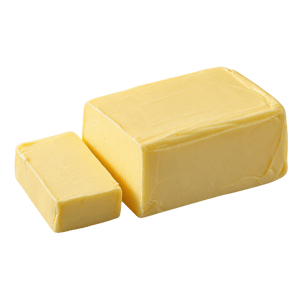
The headlines swing back and forth. Butter was out, then “butter is back,” and in January 2026 the US guidelines listed butter and beef tallow as cooking options. That sounds like a pardon, but the same paragraph still says saturated fat “should not exceed 10% of total daily calories,” and more than 70% of US adults are over that line.
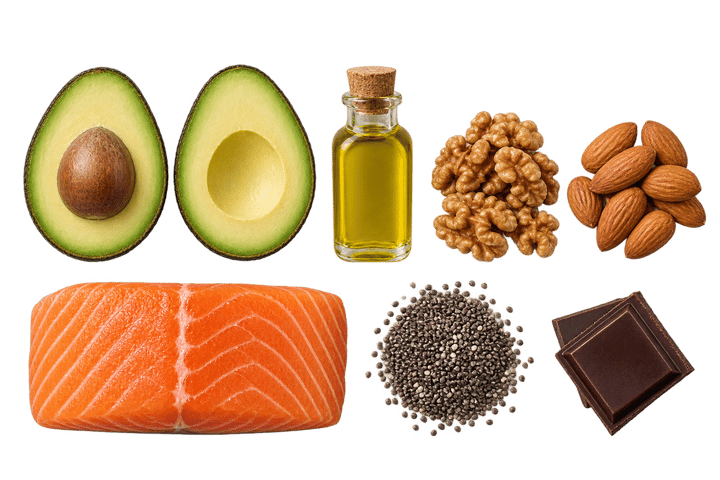
What we’d do: keep butter and cheese for the places you taste them, and make a plant oil your everyday fat. Then find the biggest source of saturated fat in your own day and swap that one. The tool below finds it.
What the trials found
The best summary is a 2020 Cochrane review. It pooled 15 randomized trials in which people cut saturated fat for at least two years.
- Heart events fell. Heart attacks, strokes and other heart events dropped by 17%. The bigger the cut, the bigger the drop.
- The effect per person is modest. In people without heart disease, 56 people would need to cut saturated fat for about four years for one of them to avoid a heart event.
- Deaths barely changed. Deaths from any cause and deaths from heart disease came out about even.
- What replaced it counted. Swapping in polyunsaturated fat or carbohydrate both looked useful. There wasn’t enough data on monounsaturated fat or protein to say.
A second kind of evidence comes from following people for decades. In 221,054 US adults tracked for up to 33 years, replacing 10 g of butter a day with plant oils went with 17% fewer deaths. It’s observational, so the butter eaters may have differed in other ways too, but it points the same way as the trials.
Why it raises LDL
Your liver clears LDL from your blood through receptors on its cells, like a drain. Long-chain saturated fats turn those receptors down, and several unsaturated fats turn them up. A tablespoon of butter has 7.2 g of saturated fat and the same spoon of olive oil has 1.8 g, so a daily swap changes how fast the drain runs. cholesterol.guide sizes what that does to your LDL number.
The fight
People who say saturated fat is harmless point to the deaths result and to two old trials. In Minnesota (1968 to 1973) and Sydney (1966 to 1973), swapping saturated fat for corn or safflower oil and margarine didn’t save lives, and in Sydney more men died. The researchers who recovered the Minnesota data noted that the comparison diet was itself full of trans fat from the margarines and shortenings of the time. Are seed oils bad for you? goes through both trials.
The 2026 guidelines say “More high-quality research is needed to determine which types of dietary fats best support long-term health.” We’re confident saturated fat raises LDL and that cutting it lowers heart events. Whether it changes how long you live is less clear.
8 sources
- Hooper et al., Reduction in saturated fat intake for cardiovascular disease, Cochrane Database of Systematic Reviews, 2020europepmc.org
- Zhang et al., Butter and plant-based oils intake and mortality, JAMA Internal Medicine, 2025pmc.ncbi.nlm.nih.gov
- US Department of Agriculture and US Department of Health and Human Services, Dietary Guidelines for Americans, 2025 to 2030, p. 3, January 2026cdn.realfood.gov
- US Department of Agriculture and US Department of Health and Human Services, Dietary Guidelines for Americans, 2020 to 2025, p. 100, 2020dietaryguidelines.gov
- Ramsden et al., Re-evaluation of the traditional diet-heart hypothesis: analysis of recovered data from Minnesota Coronary Experiment (1968-73), BMJ, 2016pmc.ncbi.nlm.nih.gov
- Ramsden et al., Use of dietary linoleic acid for secondary prevention of coronary heart disease and death: evaluation of recovered data from the Sydney Diet Heart Study, BMJ, 2013europepmc.org
- Dietschy, Dietary fatty acids and the regulation of plasma low density lipoprotein cholesterol concentrations, Journal of Nutrition, 1998europepmc.org
- Gebhardt and Thomas, Nutritive Value of Foods, Home and Garden Bulletin 72, Table 9, USDA Agricultural Research Service, 2002ars.usda.gov