Is butter worse than olive oil?
On this page
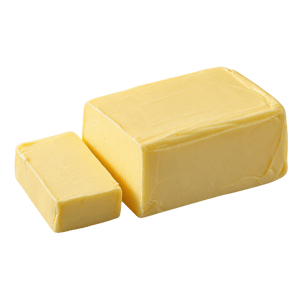
For your heart, yes. A tablespoon of butter has 7.2 g of saturated fat and a tablespoon of olive oil has 1.8 g. In a study of 221,054 US adults followed for up to 33 years, replacing 10 g of butter a day with plant oils went with 17% fewer deaths.
Butter’s reputation has swung back. It’s one ingredient, it’s been around forever, and in January 2026 the US guidelines listed it as a cooking option. The same line puts olive oil first: “prioritize oils with essential fatty acids, such as olive oil. Other options can include butter or beef tallow.” And the paragraph after it caps saturated fat at 10% of calories.
What we’d do: cook in olive oil, and keep butter for the places you taste it, like a croissant or the last spoonful in a sauce. When you do use butter, count it, since one tablespoon is about a third of a 2,000 calorie day’s line.
Spoon for spoon
| A tablespoon (USDA) | Butter | Olive oil |
|---|---|---|
| Fat | 12 g | 14 g |
| Saturated | 7.2 g | 1.8 g |
| Monounsaturated | 3.3 g | 9.9 g |
| Polyunsaturated | 0.4 g | 1.1 g |
| Share of a 22 g line | 32% | 8% |
About 62% of butter’s fat is saturated, against about 13% of olive oil’s. Butter also carries a little natural trans fat, which comes with milk fat and wasn’t touched by the FDA’s ban on the industrial kind. Olive oil has more fat per spoon because butter is about 16% water.
The 221,054 people
Researchers followed nurses and other health professionals in three long-running US studies, the two Nurses’ Health Studies and the Health Professionals Follow-up Study, from 1990 or 1991 to 2023. Over that time 50,932 of them died.
- People who ate the most butter had 15% more deaths than those who ate the least.
- People who ate the most plant oil had 16% fewer deaths.
- Every extra 5 g a day of olive oil went with 8% fewer deaths.
- Replacing 10 g of butter a day, about two thirds of a tablespoon, with plant oils went with 17% fewer deaths overall and 17% fewer cancer deaths.
It’s observational, so people who chose olive oil over butter may have been different in other ways, and the authors say some of that may remain in the results. Most of the people were white health professionals.
Why
Saturated fat raises LDL by slowing how fast your liver clears it, and monounsaturated and polyunsaturated fats lower it. Moving 5.4 g a day from saturated fat to mostly monounsaturated fat is the change, and cholesterol.guide works out what that does for your LDL. Butter is back has the rest of the argument.
- Saturated
- Monounsaturated
- Polyunsaturated
Coconut oil
11.2 g saturated a tablespoon
- Mono
- 0.9 g
- Poly
- 0.2 g
- Saturated share
- 83%
Smoked at 376 °F (191 °C) in one 2018 lab test of supermarket bottles.
The most saturated cooking fat, about 83%. Use it for flavor, not as your everyday oil.
Olive oil
1.8 g saturated a tablespoon
- Mono
- 9.9 g
- Poly
- 1.1 g
- Saturated share
- 13%
Smoked at 404 °F (207 °C) in one 2018 lab test of supermarket bottles (extra virgin 404 °F, olive 406 °F, virgin 348 °F).
Everyday cooking, roasting and dressing. In the test, extra virgin olive oil made the fewest breakdown compounds averaged over both heating runs, with coconut oil close behind.
The heat test
Deep frying usually tops out at 356 °F (180 °C). Averaged over both heating runs, extra virgin olive oil made the fewest breakdown compounds of the ten bottles, with coconut oil close behind, and canola the most. Smoke point didn't predict that. The lab was an olive oil company's (de Alzaa 2018), and the test bottles were Australian.
These are the US guideline's lines. The Gyroscope app personalizes yours.
5 sources
- Gebhardt and Thomas, Nutritive Value of Foods, Home and Garden Bulletin 72, Table 9, USDA Agricultural Research Service, 2002ars.usda.gov
- Zhang et al., Butter and plant-based oils intake and mortality, JAMA Internal Medicine, 2025pmc.ncbi.nlm.nih.gov
- US Department of Agriculture and US Department of Health and Human Services, Dietary Guidelines for Americans, 2025 to 2030, p. 3, January 2026cdn.realfood.gov
- Fernandez and West, Mechanisms by which dietary fatty acids modulate plasma lipids, Journal of Nutrition, 2005europepmc.org
- US Food and Drug Administration, Trans Fatfda.gov